
Sampling design decides whether a result means anything
Four decisions decide whether a testing report is usable: where samples are taken, how many, how they are handled, and which method the laboratory runs. Only the fourth happens in a laboratory, and it is the one most buyers ask about first.
1. Where the samples are taken
A sampling plan is a set of deliberate choices derived from the system diagram: points where the system is controlled, points that represent the extremes of the system, and points that represent exposure.
- Where water enters the building, as a reference.
- At the water heater, outlet and, where relevant, the bottom of the tank.
- At the far end of a hot water loop, which is where temperature is hardest to hold.
- At outlets that are rarely used, which is where water sits.
- At outlets that represent exposure in that building type.
- On any separate system: cooling tower, spa, fountain, process water.
2. How many
More points cost more money and produce a picture that can actually be read. Fewer points cost less and produce a result that describes very little.
There is no honest universal number: it depends on the size and complexity of the system, on the building type, on the programme, and on any applicable requirement. What is universal is that the number should be justified in the plan rather than set by a price target.
This is the most common way two quotes differ, and it is why the cheapest quote is usually the smallest plan, see what drives the cost.
3. How samples are handled
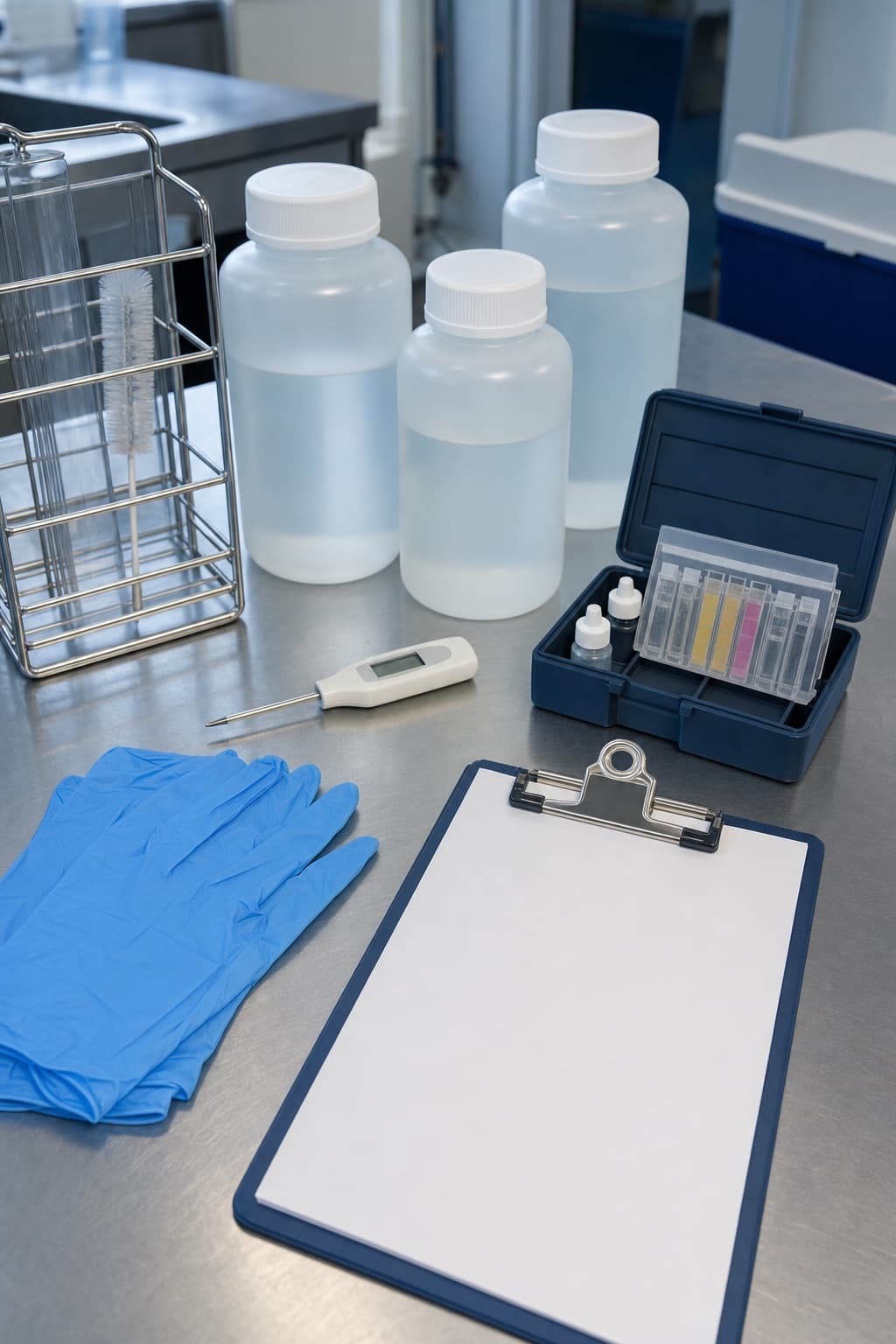
Collection technique, containers, neutralization of residual disinfectant where applicable, temperature during transport, and the time between collection and analysis all affect the result. So does the chain of custody documentation, which is what allows anyone to say later that this sample came from that point.
4. Which method the laboratory runs
Different laboratory approaches answer slightly different questions and report in different units. Culture-based methods and molecular methods are not interchangeable, and comparing a result from one against a limit written for the other is a mistake that looks like diligence.
Two practical rules follow. Ask which method is being used, and why. And keep the method consistent over time, because trending results across methods is not trending.
What the report should contain
- Each sample point, described well enough to be found again by somebody else.
- Collection date, time and conditions, including who collected.
- The method used and the laboratory's accreditation.
- The result per point, in the method's units.
- What was not sampled, and why.
- Nothing that reads as a health conclusion, that is not the laboratory's role, and not ours.
Frequently asked
Can we collect the samples ourselves?
Some programmes do, with training and a documented procedure. Collection technique genuinely affects the result, so “we can save the site visit” is a decision to make deliberately rather than by default.
How long do results take?
It depends on the method, and the difference between approaches is substantial. Ask for the turnaround at bid stage, because it changes how a result can be used.
What limits should we compare results against?
The ones written in your programme, or set by whatever requirement applies to your building. This site publishes no thresholds, deliberately, a number quoted out of its framework is worse than no number.
Last reviewed July 29, 2026.
Related pages
Have a plan designed, not a price per sample
Describe the systems and the programme. A provider who proposes a plan and justifies the number of points is doing the job; one who quotes per sample is selling a commodity.
Legionella Screen samples building water systems and cooling towers and has the samples analysed by culture in an accredited laboratory. It does not diagnose illness, does not treat anyone, and gives no medical advice of any kind.